Wired vs Wireless Security Cameras: Which Is Better? (October 2026)
Wired security cameras send their video through a cable to a recorder, while wireless cameras send it over the air and run on a battery, a solar panel or a plug. Pick wired for a spot you can cable, and pick battery or solar wireless cameras for a yard with no nearby outlet.
On this page (13 sections)
- Wired vs wireless security cameras: how the video gets back to you
- How each one gets power
- Wired vs wireless security cameras for install work
- Storage and recording: where the video goes
- Night view: wired vs wireless security cameras
- Weather ratings: wired vs wireless security cameras
- Adding cameras later: wired vs wireless security cameras
- Maintenance: wired vs wireless security cameras
- Remote viewing: wired vs wireless security cameras
- Wired vs wireless security cameras for a shed or garage
- Which one is better for your house?
- Our score for each kit
- Wired or wireless: the decision rule
Wired security cameras send video through a cable, while wireless cameras send it over the air. Wired systems suit a spot you can cable to, and battery or solar wireless systems suit a yard with no nearby outlet.
Most of the choice comes down to power, install work and where the recorder sits. This comparison looks at those three things with one wired kit and one wireless kit, so you can see the trade-offs in real products.
 Best for a wired kit with no Wi-Fi needed
ANNKE 3K Lite Wired Security Camera System
 Best for a yard with no nearby outlet
aosu D1 Classic 4-Cam Solar Camera Kit
Wired vs wireless security cameras: how the video gets back to you
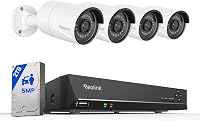
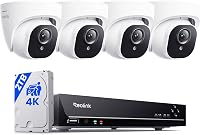
A wired camera sends its video along a cable to a recorder in the house. The ANNKE kit uses BNC cables, which carry the picture from each camera to a DVR with its own 1TB drive, as our ANNKE 3K Lite review explains.
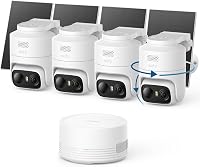
A wireless camera sends its video over a wireless link to a base or router. The aosu kit uses a base that connects to your router with an Ethernet cable, while the cameras link to the base without a cable of their own (see the aosu D1 Classic review).
The difference matters for reliability. A wired camera doesn't depend on a wireless signal across the yard, while a wireless camera depends on the signal strength at each spot.
How each one gets power
Wired cameras draw power from the recorder or an adapter. The ANNKE kit ships with three 12V adapters and two power splitters, so the recorder and cameras run from the house supply.
Wireless cameras run on a battery or a solar panel. ANNKE doesn't need a battery, but aosu says its built-in solar panel keeps each camera charged with about 3 hours of direct sunlight a day.
A wireless camera in shade may need more care with charging. Place it where the panel gets direct sun, since a shaded spot can lower the charge.
Wired vs wireless security cameras for install work
Wired kits mean cable work. Each camera needs a run back to the recorder, and that can mean drilling through walls and planning the route before you start.
Wireless kits skip most of that work. aosu says each camera mounts with three screws and takes about 5 minutes to install, which makes it a practical choice for a DIY install.
For wired runs, keep the cable away from power lines and follow the manual's steps. Hire a pro for work that needs a ladder on a tall wall or cable run through a finished attic.
Wired vs wireless security cameras for a yard
A yard with no outlet near the spot suits wireless, since the cameras don't need cable to each post or eave. A yard with a shed or garage close to the house suits wired, since one run can reach the recorder.
Think about the far corner too. A wired run has a fixed length, while a wireless camera only needs to reach the base or router signal.
Storage and recording: where the video goes
Wired kits often record to a large drive. The ANNKE kit includes a 1TB hard drive and supports drives up to 10TB, so a DVR can keep days of footage on the drive.
Solar and battery kits often use a smaller base. aosu's base has 32GB of local storage, which the brand says holds about 120 days of loop recording, with events saved as clips.
When the drive fills, a DVR records over its oldest footage, so keep an eye on the days it covers. The aosu base works the same way with its loop recording, so older clips roll off as new ones save.
Both kinds can avoid a monthly cloud plan. Check the box list for the drive or base storage, and look for any paid cloud feature before you buy.
Night view: wired vs wireless security cameras
ANNKE says its 3K Lite cameras see up to 100 feet in black and white and about 66 feet in full color. aosu says its D1 Classic cameras have full-color night vision with built-in spotlights and an infrared mode for black and white.
Full-color night vision needs light, so the spotlight matters on a dark yard. Each spotlight draws on the camera's power, so a solar camera may run its light less often than a camera on a steady supply.
Place the cameras with the night range in mind. Aim for the far end of the yard first, since the nearest corner usually stays bright enough on its own.
Weather ratings: wired vs wireless security cameras
ANNKE says its cameras are IP67 weatherproof, and aosu rates its wireless cameras IP65. The DVR and the aosu base stay indoors either way, so the weather rating applies to the cameras only.
Mount both kinds where rain runs off the lens, and check the connectors for corrosion each season. A camera in a wet spot needs the same care whether it's wired or wireless.
Adding cameras later: wired vs wireless security cameras
The ANNKE DVR has eight channels, and the kit uses all eight, so a ninth camera needs a second recorder or a different setup. aosu says one base connects up to four cameras, so a fifth camera needs a second base.
Check the channel count and the base limit before you buy. Adding a camera is simpler when the kit has spare channels or room on the base.
Maintenance: wired vs wireless security cameras
Wired kits need little upkeep beyond checking connectors, cables and adapters. Wireless kits need a check on each camera's charge, since a camera in shade can drop to a low battery.
Set a reminder to check both kinds twice a year. Clean the lens and look for loose mounts after storms.
Remote viewing: wired vs wireless security cameras
Both kinds need an internet connection for viewing from away. The ANNKE DVR includes an Ethernet cable for the router link, and the aosu base connects to the router with its own Ethernet cable.
Once the link is set, you can check the view on your phone from anywhere with a signal. Check the connection speed at the house, since a slow upload makes the live view stutter on a phone.
Wired vs wireless security cameras for a shed or garage
A shed or a detached garage often has no cable path from the house, which suits a wireless kit. A wireless camera there still needs a charge, so pick a spot with sun for a solar panel or plan a steady power supply.
A wired run to the shed works when a conduit or a cable path is already in place. Plan the route before you dig, and keep the cable away from anything that could damage it.
Which one is better for your house?
Pick wired if the cameras can be cabled to one recorder and the power comes from the house. That setup is a good fit for a fixed layout, a garage or a home with open walls to run cable through.
Pick wireless if you need cameras on a fence, a shed or a side yard with no cable path. A solar wireless kit saves the most time when the spot is far from the house.
- Pick wired: when cable runs are easy, and you want the recorder in the house.
- Pick wireless: when the spot has no outlet, and you can place a solar panel in sun.
Our score for each kit
Our score weighs specs, features and buyer feedback against what you're shopping for. The ANNKE kit scores 8.6 for a wired setup with a large drive, and the aosu kit scores 8.5 for a yard that has no nearby outlet.
Wired or wireless: the decision rule
Choose wired if you can run cable and want the recorder to sit inside the house. Choose wireless if the spot is far from an outlet or hard to cable.
Both kinds can work well, and the right one depends on the spot. Our types of security camera systems guide explains each kit style, and the PoE vs Wi-Fi comparison shows where a PoE system sits between the two.
For more kits, check the best wired security camera systems or the best wireless security camera systems.
Frequently asked questions
Are wired security cameras better than wireless ones?
Neither is better for every home, since wired cameras need cable runs while wireless cameras need a power source at each spot. Pick by where the cameras go, and check the power and cable path first.
Do wireless security cameras need Wi-Fi?
Most wireless kits send video over Wi-Fi or to a base that connects to the router. Some systems link cameras to a base with their own wireless signal, so check how the kit connects before you buy.
Is a wired security camera harder to install?
It usually takes more time, since you run cable from each camera to the recorder. Drilling and running cable through walls can need a ladder and a second person, so follow the manual and hire a pro for the hard parts.
Do wireless cameras cost more to run than wired ones?
Neither costs much to run, since a wired camera draws a small amount of power from an adapter and a solar or battery camera only needs sun or an occasional recharge. Compare the power method and the storage in each kit before you decide.