What Is a PoE Camera System and How Does It Work?
A PoE camera system powers each camera and sends its video over one Ethernet cable to a recorder. That recorder, called an NVR, stores the footage on a drive.
On this page (9 sections)
- What a PoE camera system is made of
- How PoE sends power and video on one cable
- Do you need an NVR for a PoE camera?
- Where a PoE camera system works best
- Setting up a PoE camera system step by step
- When a PoE switch helps
- How a PoE system compares with a DVR kit
- Can a PoE camera system work without internet?
- Is a PoE camera system right for your house?
If you're asking what a PoE camera system is, the short answer is simple. It's a set of cameras that gets power and sends video over one Ethernet cable to a recorder.
PoE stands for power over Ethernet, and the recorder that stores the footage is called an NVR.
This guide explains the parts, how the power reaches each camera and when a PoE system fits a house. It also shows where PoE differs from a wireless system, so you can tell which one suits your walls and your yard.
What a PoE camera system is made of
A PoE system has three main parts: the cameras, the cables and the NVR. The NVR is the box that records every camera and shows the live view on a monitor.
Each camera has an Ethernet port, so it connects to the NVR the same way a computer connects to a router. The cable carries the video up to the NVR and the power back down to the camera.
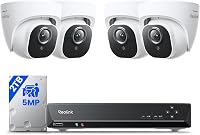
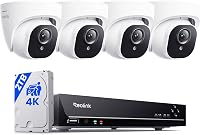
Many kits include a drive, so the recording starts as soon as you power on the NVR. This Reolink kit ships with four cameras, a 2TB drive and 18 meter network cables.
How PoE sends power and video on one cable
A standard Ethernet cable carries data on pairs of wires, and PoE adds power to the same cable. The NVR or a PoE switch supplies that power, and the camera draws what it needs.
PoE standards set how much power each port can supply. TP-Link rates its LS108GP switch at up to 30 watts per port with a 65 watt total budget, so the total load matters when you add many cameras.
Keep track of the total power your cameras draw. A kit with a few cameras usually fits inside one switch, while a larger kit may need a second one.
Do you need an NVR for a PoE camera?
Most PoE kits need an NVR, since it stores the footage and runs the local view. A PoE camera on its own needs a recorder somewhere on the network to save its video.
Some PoE cameras also accept a microSD card. Use that option only if the maker lists it for your model, since a card holds far less than the drive in an NVR.
Where a PoE camera system works best
What a PoE camera system needs before the install
A PoE system suits a house where you can run one cable from each camera spot back to the NVR. Plan the route before you drill, and keep each run inside the length the cable is rated for.
Outdoor cable needs a jacket that handles sun, rain and cold. This 100-foot outdoor cable has a UV-resistant, waterproof jacket, but its conductors are copper-clad aluminum.
Brozzag recommends it for low-power PoE only, so check your camera's power draw first and choose solid copper cable for long or high-power runs.
Drilling, ladders and cable through an attic or wall can be a job for a pro. Follow the manual's install steps, and keep any cable well away from power lines.
Setting up a PoE camera system step by step
Start with the NVR. Connect it to a monitor with the HDMI cable, plug in its power adapter, and set the admin password before anything else.
Next, run the cable from each camera spot to the NVR or switch. Connect each cable at both ends and check the link light on each port before you mount a camera.
Then connect the NVR to your router, so the cameras can be added in the app. Keep the NVR on a fixed network address, since a changed address can break remote viewing.
Last, add each camera, update the firmware, and set the recording schedule. Mount the cameras once the live view works from the NVR.
When a PoE switch helps
A PoE switch adds more PoE ports when the NVR has fewer ports than you have cameras. It also lets you place a camera farther from the NVR than the NVR's own ports allow.
The TP-Link LS108GP has eight PoE ports and a plug-and-play setup, so you don't need to configure it before you use it. TP-Link says its Extend Mode carries PoE up to 820 feet.
How a PoE system compares with a DVR kit
A DVR kit is a different setup. It uses a recorder called a DVR and coaxial BNC cables, not Ethernet, so a PoE switch won't power its cameras.
You can tell them apart by the cable. A PoE camera has one Ethernet port, while a DVR camera runs on a separate power cable and a BNC video cable.
Our wired vs wireless security cameras guide covers how wired kits differ from wireless ones.
Can a PoE camera system work without internet?
Yes, the NVR records and shows live video without internet. A monitor on an HDMI cable, or a phone on the same home network, can view the cameras with no outside connection.
Internet is needed for remote viewing from away, push alerts to your phone and firmware updates. Our do PoE cameras need internet guide explains which features need it and which don't.
Here is a short list of what each option needs:
- Works without internet: recording, playback on the NVR and a live view on a monitor.
- Needs internet: viewing from outside the house, phone alerts and updates from the maker.
Is a PoE camera system right for your house?
Pick a PoE system if you can run cable to each camera spot and want recording that stays inside the house. Pick a wireless system if the spots are hard to reach by cable.
If PoE is your pick, read our best PoE camera systems list and the install guide before you buy. If you're still weighing it against Wi-Fi cameras, see PoE vs Wi-Fi camera systems.
Frequently asked questions
What does PoE stand for in a camera system?
PoE stands for power over Ethernet, and one network cable carries both power and video. The recorder or a PoE switch supplies that power, so the camera spot needs no outlet.
Is a PoE camera the same as an IP camera?
Most PoE cameras are IP cameras, which send digital video over a network. PoE describes how the power arrives, so a PoE camera is an IP camera that takes its power from the network cable.
How far can a PoE camera sit from the recorder?
A standard Ethernet run is good for about 100 meters, or 328 feet, from switch to device. TP-Link says its LS108GP switch has an Extend Mode that carries PoE up to 820 feet, which is the maker's figure for that setup.
Do PoE cameras need a separate power adapter?
Usually not at each camera, since the PoE port sends the power down the cable. The recorder or switch still needs its own power adapter, and the kit's box list shows which adapters come with it.